Key Takeaways
- ActivArmor casts are custom 3D-printed from a digital scan of the injured limb, rather than hand-molded from wet plaster or fiberglass.
- The waterproof, breathable design allows many patients to shower and stay active during recovery in ways that are not possible with a traditional cast.
- ActivArmor is listed with the U.S. Food and Drug Administration (FDA) as a Class I device, the lowest-risk category, and has been tested for safe skin contact when used as directed by a treating provider.
- The fitting process starts with a quick digital scan, and the cast is custom-designed around each patient's injury, sizing, and any devices like bone stimulators.
- Not every fracture is a candidate for this option, so an evaluation with a provider is the best way to confirm eligibility.
- Modern Edge Sports & Orthopedic Medicine offers on-site ActivArmor scanning and fitting for patients throughout Jeannette, PA, and the greater Pittsburgh area, and patients can request an appointment to see if it is the right fit for their fracture.
What ActivArmor Is and How It's Custom-Made for Each Patient
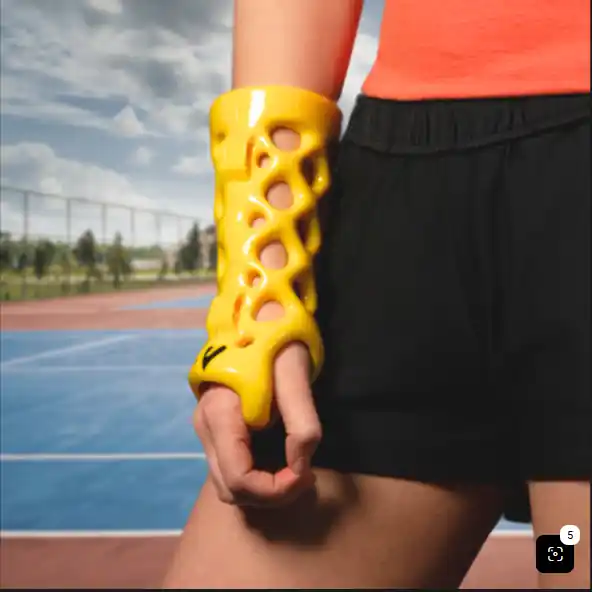
A traditional plaster or fiberglass cast is molded by hand around an injured limb and hardens in place. An ActivArmor cast takes a different approach. It begins with a digital 3D scan of the limb. The scan is then used to design and print a custom-fit cast from a lightweight plastic that is made to be safe against the skin (this is called biocompatible).
Because the cast is built from an exact scan, it can be shaped more precisely around the injury. It can also leave room for airflow, which a wet, hand-wrapped cast cannot do in the same way.
The Materials and 3D-Scanning Process Behind It
Getting fitted starts with a quick, non-invasive scan. At Modern Edge Sports & Orthopedic Medicine, a handheld 3D scanner captures a detailed map of the injured limb in under a minute. The scan goes to design software, where the cast is customized to the patient's injury, sizing, and any hardware needs. The cast is then printed in the office on a 3D printer. It is made from acrylonitrile butadiene styrene (ABS), a strong, lightweight plastic.
ActivArmor has been tested under ISO 10993-5, an international standard for checking how materials affect living cells. (ISO stands for the International Organization for Standardization.) This supports skin contact as directed by a treating provider.
ActivArmor is also listed with the FDA as a Class I device. According to the FDA, Class I is the category for devices considered to carry the lowest risk to patients, while Class III is reserved for devices that pose the greatest risk. Once the cast is printed, the patient returns to the office for a precision fitting so the cast sits correctly and supports the injury as intended.
Key Differences from Traditional Plaster or Fiberglass Casts
Traditional casts come with some well-known drawbacks. According to Mayo Clinic, plaster casts and fiberglass casts with regular padding are not waterproof, and a wet cast can lead to skin irritation or infection. This is why patients are usually told to cover a traditional cast with plastic before every shower.
An ActivArmor cast is designed to avoid that limitation. For appropriate injuries, and when cleared by the treating provider, its waterproof design can allow patients to shower, wash their hands, and in some cases swim while the cast is on. The rigid, breathable plastic is also built to help prevent the odor and skin irritation that can develop under cotton-lined casts over a long recovery.
Traditional Cast vs. ActivArmor 3D-Printed Cast
| Feature | Traditional Plaster or Fiberglass Cast | ActivArmor 3D-Printed Cast |
|---|---|---|
| Fitting method | Hand-molded, wet application | Digital 3D scan, custom-printed |
| Water exposure | Not waterproof; must be covered for bathing | Waterproof design for appropriate injuries, when cleared by provider |
| Hygiene | Prone to trapped moisture, odor, and skin irritation | Designed to reduce odor and skin irritation |
| Weight | Bulkier, heavier material | Lightweight, rigid plastic |
| Customization | Standard shape and color | Custom fit and color options; can include planned openings for devices |
| Device compatibility | Openings typically cut after the fact, which can weaken the cast | Openings for bone stimulators or transcutaneous electrical nerve stimulation (TENS) units built into the design phase |
Benefits Like a Waterproof, Breathable, Custom Fit
Beyond day-to-day comfort, ActivArmor casts offer a few practical advantages worth knowing about before a fitting:
- A precise, custom fit based on an exact scan of the injury.
- A design that supports showering and, for some injuries, swimming once cleared by a provider.
- Custom color choices, so a cast can match personal style or a favorite team.
- Built-in openings for bone growth stimulators or TENS units (devices that send mild electrical pulses through the skin) when part of a treatment plan. These are planned during design rather than cut in afterward.
This option works well for many non-surgical injuries. Wrist and forearm examples include a distal radius fracture (a break near the wrist end of the forearm bone) and a scaphoid fracture (a break in a small wrist bone near the base of the thumb). Hand examples include boxer's fractures (a break at the knuckle end of the hand, often from a direct hit). It can also support lower leg and elbow injuries that do not need surgery, such as high-ankle sprains (a sprain of the ligaments just above the ankle) and radial head fractures (a break in the top of the forearm bone at the elbow).
Who Might Be a Good Candidate for This Option
Not every injury is a fit for a 3D-printed cast. Eligibility depends on the specific injury and whether surgery is needed. Modern Edge sees patients through two paths:
- Primary fracture care: Patients sent home from an emergency room or urgent care in a temporary splint can have their fracture evaluated, confirmed as non-surgical, and managed from diagnosis through complete healing, including the 3D scan, printing, and fitting.
- Collaborative cast fitting: Patients already under the care of an orthopedic surgeon can still be fitted for an ActivArmor cast. The visit includes a consultation to review records and imaging, along with a written order from the treating physician. After the cast is fitted, the patient returns to their surgeon for ongoing follow-up care.
See How ActivArmor Supports an Active Recovery
A broken bone does not have to mean weeks of a heavy, itchy cast that cannot get wet. Dr. Michael Wong offers on-site ActivArmor scanning and fitting for patients managing a fracture that does not require surgery, whether they are new to Modern Edge or already working with an outside surgeon.
If a recent fracture might be a good candidate for a custom 3D-printed cast, request an appointment with Modern Edge to find out what recovery could look like with ActivArmor.
Frequently Asked Questions
What is ActivArmor and how is it different from a regular cast?
ActivArmor is a custom 3D-printed cast made from a digital scan of the injured limb, rather than hand-molded plaster or fiberglass. Depending on the injury and if cleared by a provider, its waterproof design allows patients to shower and stay more active during recovery than a traditional cast typically allows.
Is a 3D-printed cast safe?
ActivArmor is listed with the FDA as a Class I device, the category the FDA assigns to devices with the lowest risk to patients, and it has been tested for skin contact when used as directed by a treating provider.
Can I get an ActivArmor cast if another doctor is already treating my fracture?
Yes. Patients already under the care of an orthopedic surgeon can be evaluated for an ActivArmor cast through a consultation that reviews their records and imaging, along with a written order from their treating physician. After fitting, the patient returns to their surgeon for ongoing care.
What types of fractures can be treated with a 3D-printed cast?
This option works for many non-surgical fractures, including wrist and forearm fractures like distal radius or scaphoid fractures, hand fractures like boxer's fractures, and elbow fractures such as radial head fractures. It can also support some lower leg injuries that do not need surgery, such as high-ankle sprains.
Does insurance cover an ActivArmor cast?
Casts like this are usually billed in a similar way to other casts and splints, but coverage still depends on your plan. It is a good idea to check your benefits before your visit. Modern Edge works with many insurance plans, and the team can help answer coverage questions. You can also review the practice's list of accepted insurance plans.
How much does an ActivArmor cast cost?
The cost depends on the injury, the cast design, and how your visit is billed. The Modern Edge team can go over current pricing and payment options with you when you request an appointment.
Is there a 3D-printed cast near me in the Pittsburgh area?
Modern Edge Sports & Orthopedic Medicine offers on-site 3D scanning and cast fitting at its Jeannette, PA office, serving patients throughout the greater Pittsburgh area. Scheduling a consultation is the first step to finding out if ActivArmor is a good fit.
