
Key Takeaways
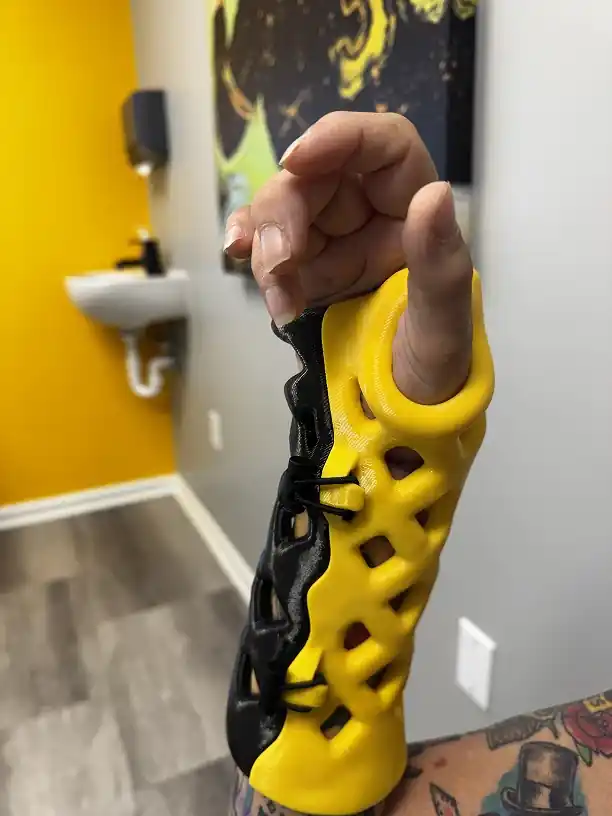
- ActivArmor is a custom 3D-printed cast made for non-surgical fractures and some injuries that need firm support while they heal.
- It can support wrist and forearm breaks, hand fractures like a boxer's fracture, elbow injuries, and some lower leg and ankle injuries.
- Distal radius fractures, or breaks near the wrist, are very common. About 1 in 6 broken bones treated in U.S. emergency rooms is a distal radius fracture, according to the American Academy of Orthopaedic Surgeons (AAOS).
- Fractures that have shifted out of place, break the skin, or cause numb fingers may need surgery or emergency care before any cast.
- A provider must confirm that a custom cast fits the specific injury, and X-rays come first.
- Modern Edge Sports & Orthopedic Medicine offers on-site ActivArmor scanning and fitting for patients across the greater Pittsburgh area, including Irwin, Greensburg, and Murrysville. Patients can request an appointment to find out whether it fits their fracture.
What Is ActivArmor, and Which Injuries Is It Designed For?
A traditional cast is molded by hand around the injured limb. An ActivArmor cast starts with a quick digital 3D scan of the limb. The scan is used to design and print a lightweight, custom-fit cast from a rigid plastic. At Modern Edge Sports & Orthopedic Medicine, the scan for an ActivArmor 3D-printed cast takes under a minute, and the cast is printed in the office.
ActivArmor is meant for injuries that do not need surgery. Not every injury qualifies, and that decision comes after an exam and X-rays. The sections below explain the injuries Modern Edge commonly treats with this option.
Which Wrist and Forearm Fractures Can ActivArmor Support?
Distal Radius Fractures
The radius is one of the two long bones in the forearm. A distal radius fracture is a break in that bone close to the wrist. According to the AAOS guide to distal radius fractures, about 1 out of every 6 broken bones treated in U.S. emergency rooms is a distal radius fracture, and the most common cause is a fall onto an outstretched arm.
When the broken bone is in a good position, the AAOS says a doctor may use a cast until the bone heals. That is the situation where a 3D-printed arm cast can be an option.
Scaphoid Fractures
The scaphoid is a small wrist bone near the base of the thumb. A scaphoid fracture can be easy to overlook at first because the pain may seem mild. Modern Edge lists scaphoid fractures among the wrist injuries that can be supported with ActivArmor when surgery is not needed.
Can ActivArmor Treat Hand Injuries Like a Boxer's Fracture?
Yes, for the right injuries. A boxer's fracture is a break at the knuckle end of a hand bone, often caused by punching or another direct impact. Other metacarpal fractures, which are breaks in the long bones of the hand, can also be supported when they do not need surgery.
Because the hand has so many small bones and joints, an exact fit matters. A cast based on a precise scan can be shaped around the injury instead of using a general mold.
What About Elbow and Lower Leg Injuries?
ActivArmor is not limited to the arm. Modern Edge also uses it for some lower leg and elbow injuries that do not require surgery:
- Radial head fractures. A break in the top of the radius bone at the elbow.
- High-ankle sprains. A sprain of the ligaments that connect the two lower leg bones just above the ankle joint.
- Fibular stress fractures. A small crack in the outer lower leg bone, often caused by repeated stress.
Some soft tissue injuries that need firm support while they heal may also qualify. Dr. Michael Wong confirms during the evaluation whether this option is appropriate for the specific injury.
Common Injuries Supported by ActivArmor
| Area | Injury | What It Is |
|---|---|---|
| Wrist and forearm | Distal radius fracture | A break of the radius bone near the wrist |
| Wrist | Scaphoid fracture | A break in a small wrist bone near the thumb |
| Hand | Boxer's fracture and other metacarpal fractures | Breaks in the long bones of the hand |
| Elbow | Radial head fracture | A break at the top of the radius bone |
| Lower leg and ankle | High-ankle sprain, fibular stress fracture | Ligament or bone injuries above and around the ankle |
When Is a Cast Enough, and When Is Surgery Needed?
A custom cast works only when the bone can heal in a good position without an operation. The AAOS explains that if a broken bone has moved out of place, a doctor may need to guide it back into position first, and in some cases the bone cannot stay in place with just a cast.
| Situation | Is a Cast Likely Enough? |
|---|---|
| Bone is in a good position | Often yes, with regular X-rays to watch healing |
| Bone has shifted out of place | A doctor may need to reset it first, and surgery is sometimes needed |
| Bone has broken through the skin | Needs prompt medical care because of infection risk |
| Fingers are numb or pale after a wrist injury | Needs emergency care right away |
The AAOS advises going to the emergency room right away for severe pain that does not improve, numb fingers, or new weakness in the thumb or index finger. Those signs call for urgent care before any cast is considered.
How Does a Custom Cast Support Healing From Start to Finish?
For a non-surgical wrist break, the AAOS describes a typical path. A splint is often used for the first few weeks to leave room for swelling. A cast may follow, and it is usually removed about 4 to 6 weeks after the injury. Physical therapy starts after that, and most distal radius fractures take about 3 months to heal enough for all activities.
At Modern Edge, patients can start with either of two paths:
- Primary fracture care.Dr. Wong reviews the X-rays from an emergency room or urgent care visit, confirms surgery is not needed, and manages the fracture through healing.
- Collaborative cast fitting. Patients already seeing an orthopedic surgeon can be fitted with an ActivArmor cast after a records review and a written order from their treating physician, then return to the surgeon for follow-up.
Patients who want to know whether their injury qualifies can request an appointment for an evaluation.
What About a Removable Cast for a Broken Wrist?
Many patients search for a removable cast for a broken wrist. For most new fractures, the bone needs steady support, so the cast usually stays on until the provider says otherwise. A removable splint is commonly used after the cast comes off, between therapy sessions, while the wrist keeps healing. Whether any removable option makes sense depends on the fracture, so it is a good question to bring to the evaluation.
Why Do Patients Choose a Waterproof, Custom Cast?
Moisture is a common problem with traditional casts. According to Mayo Clinic's guide to cast care, plaster casts and fiberglass casts with conventional padding are not waterproof, and a wet cast can lead to skin irritation or infection. The AAOS adds that water can weaken a cast, and wet casts often need to be replaced.
An ActivArmor cast is designed to be waterproof. For appropriate injuries, and when cleared by the treating provider, patients may be able to shower and stay more active during recovery. ActivArmor is listed with the U.S. Food and Drug Administration (FDA) as a Class I splint. According to the FDA's overview of medical device classes, Class I covers devices with the lowest risk, and Class III covers those with the greatest risk.
Find Out If a 3D-Printed Cast Fits Your Injury at Modern Edge
A broken bone does not have to mean weeks in a heavy cast that cannot get wet. The right first step is an exam and X-rays to confirm the fracture can heal without surgery. Dr. Wong is a board-certified physician trained through UPMC who works with athletes at every level.
To find out whether a custom ActivArmor cast fits a wrist, hand, elbow, or lower leg injury, request an appointment with Modern Edge Sports & Orthopedic Medicine or call (724) 527-2700. Learn more about the practice on the Modern Edge home page.
Frequently Asked Questions
What injuries can ActivArmor treat?
ActivArmor supports non-surgical fractures such as distal radius and scaphoid fractures, boxer's fractures and other hand fractures, radial head fractures, and fibular stress fractures. It can also support high-ankle sprains. A provider confirms eligibility first.
Can ActivArmor be used for a broken wrist?
Yes, for many non-surgical wrist breaks, including distal radius and scaphoid fractures. X-rays and an exam come first, because a bone that has shifted out of place may need to be reset or repaired before any cast.
Is there a removable cast for a broken wrist?
Most new wrist fractures need steady support, so the cast usually stays on until the provider says otherwise. A removable splint is often used later, between therapy sessions. Ask Dr. Wong which option fits the injury.
Does insurance cover an ActivArmor cast?
ActivArmor is typically billed under standard durable medical equipment (DME) casting and splinting codes, which is the same billing category most plans use for regular cast supplies. Coverage varies by plan, so patients should check their benefits before the appointment and can review the Modern Edge insurance page.
Where can I find a 3D-printed cast near me in the Pittsburgh area?
Modern Edge Sports & Orthopedic Medicine offers on-site 3D scanning and printing in its office, serving patients across the greater Pittsburgh area, including Irwin, Greensburg, and Murrysville. Patients can request an appointment online or call (724) 527-2700.
