
Common Causes of Achilles Tendon Pain: Why It Happens and How to Treat It
Key Takeaways
• Achilles tendon pain is often caused by overuse, strain, or repetitive stress.
• Activities like running, jumping, or sudden increases in activity can trigger symptoms.
• Tight calf muscles and poor footwear can increase tendon stress.
• Early symptoms may include stiffness, especially in the morning.
• Without treatment, pain can worsen and affect mobility.
• Early diagnosis and treatment can help prevent long-term complications.
Book an Appointment(opens in a new tab)
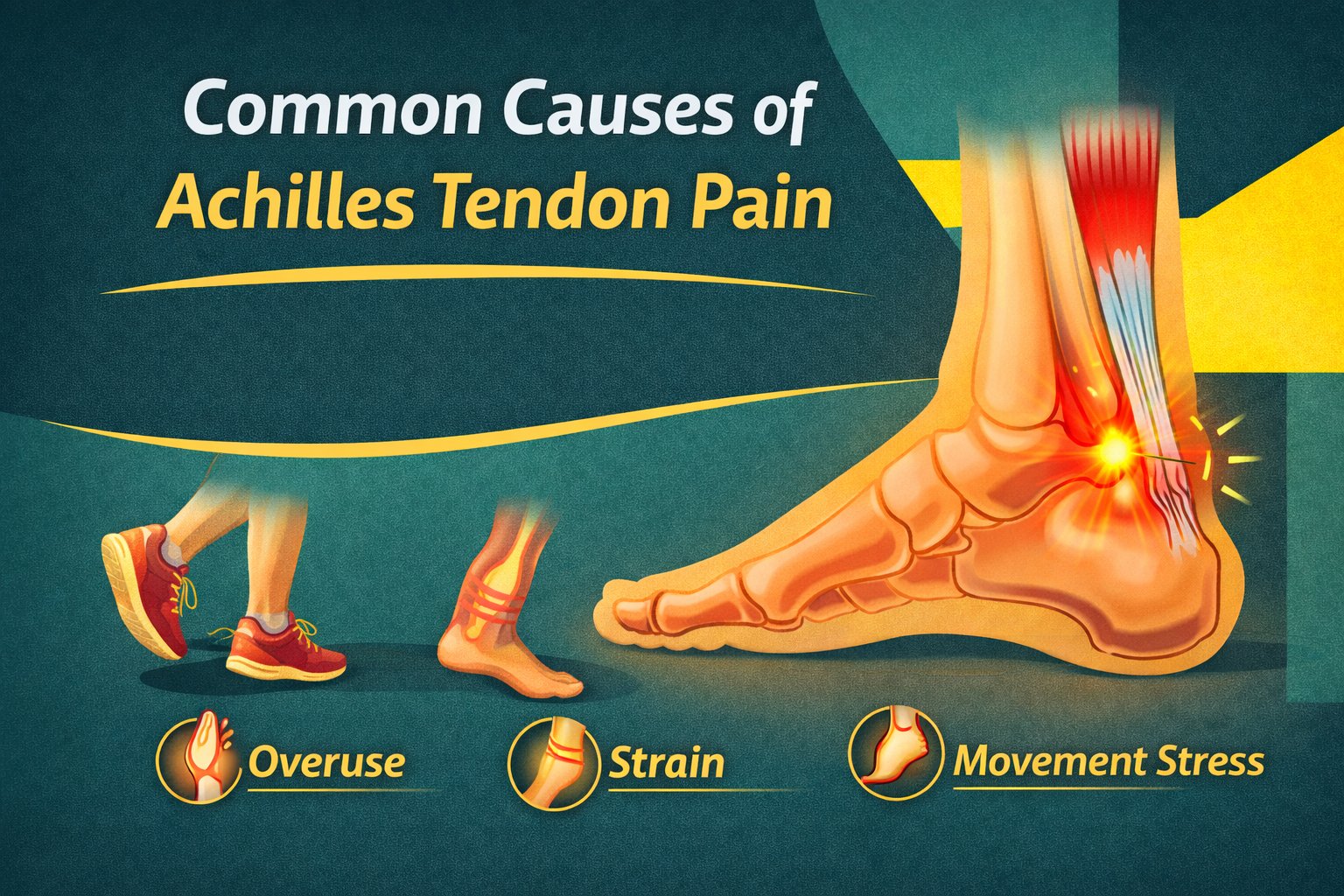
What Causes Achilles Tendon Pain?
Achilles tendon pain is commonly caused by repetitive strain or overuse of the tendon.
The Achilles tendon connects the calf muscles to the heel and plays a key role in walking, running, and jumping.
When excessive stress is placed on this tendon, it can become irritated or inflamed, leading to discomfort.
Understanding how this fits into broader ankle pain and Achilles tendon conditions(opens in a new tab) helps identify the root cause.
Overuse and Repetitive Stress
One of the most common causes of Achilles tendon pain is overuse.
Activities such as running, jumping, or sudden increases in activity levels can place repeated stress on the tendon.
This can lead to inflammation and early tendon damage.
Many individuals first notice symptoms such as morning ankle pain(opens in a new tab) or stiffness after rest.
Tight Calf Muscles and Limited Flexibility
Tight calf muscles can increase tension on the Achilles tendon, making it more susceptible to strain.
Reduced flexibility limits the tendon’s ability to absorb stress during movement.
This may contribute to symptoms such as pain when pointing the toes downward(opens in a new tab).
Improving flexibility can help reduce tendon stress and prevent injury.
Previous Injuries and Ankle Instability
Individuals with a history of ankle injuries may have an increased risk of developing Achilles tendon pain.
Conditions such as ankle sprains(opens in a new tab) can affect joint stability and movement patterns.
This can place additional strain on the tendon over time.
Recurring symptoms are often linked to unresolved or previous injuries.
Improper Footwear and Biomechanics
Wearing unsupportive footwear can increase stress on the Achilles tendon.
Poor biomechanics, such as improper walking or running patterns, can also contribute to uneven load distribution.
These factors can lead to ongoing tendon irritation and discomfort.
Addressing footwear and movement patterns can help reduce risk.
How Achilles Tendon Pain Progresses
Without treatment, Achilles tendon pain can gradually worsen over time.
What begins as mild stiffness may progress into persistent pain and reduced mobility.
Many individuals begin noticing symptoms similar to Achilles tendonitis(opens in a new tab).
Early intervention is important to prevent chronic conditions.
How Is Achilles Tendon Pain Diagnosed?
Diagnosis typically involves a physical examination and evaluation of symptoms.
Imaging such as diagnostic ultrasound(opens in a new tab) may be used to assess tendon health.
Accurate diagnosis helps guide treatment decisions.
Treatment Options for Achilles Tendon Pain
Treatment depends on the severity of the condition.
Initial management may include rest, stretching, and strengthening exercises.
Non-surgical treatments such as corticosteroid injections(opens in a new tab) may reduce inflammation.
Regenerative options like PRP therapy(opens in a new tab) may support healing.
Patients often explore non-surgical treatment options(opens in a new tab).
How to Prevent Achilles Tendon Pain
Preventing tendon pain involves reducing strain and improving flexibility.
Stretching, strengthening, and proper footwear are key strategies.
Many individuals review injury prevention strategies(opens in a new tab).
When Should You See a Specialist?
If pain persists or worsens, medical evaluation is recommended.
Early care helps prevent long-term complications.
Book an Appointment(opens in a new tab)
Frequently Asked Questions
What causes Achilles tendon pain?
It is commonly caused by overuse, strain, and repetitive stress on the tendon.
Can tight calves cause Achilles pain?
Yes, tight calf muscles increase tension on the tendon and contribute to pain.
Can this condition worsen over time?
Yes, untreated symptoms can progress into chronic tendon conditions.
What treatments are available?
Rest, therapy, injections, and PRP are commonly used treatments.
When should I see a doctor?
If pain persists, worsens, or affects mobility.
