
How to Prevent Ankle Pain & Achilles Injuries Effectively
Key Takeaways
• Preventing ankle pain starts with proper movement, strength, and recovery habits.
• Achilles injuries often result from overuse, poor biomechanics, or sudden activity increases.
• Stretching, strengthening, and footwear play a key role in injury prevention.
• Early symptom awareness helps reduce the risk of long-term complications.
• Consistent prevention strategies support long-term joint and tendon health.
• Many patients explore prevention after experiencing recurring ankle pain.
Book an Appointment(opens in a new tab)
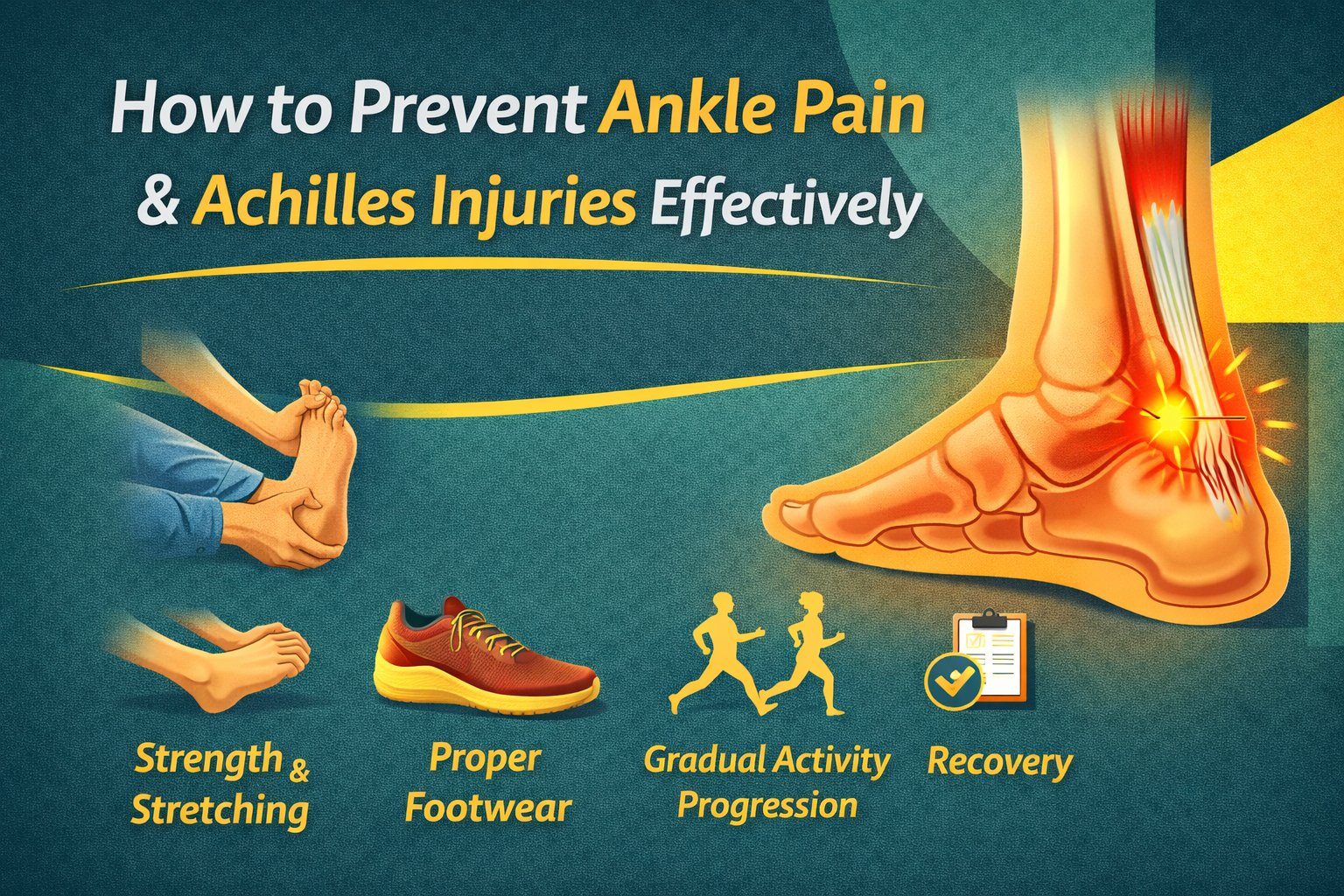
Why Ankle Injury Prevention Matters
Ankle pain and Achilles tendon injuries are among the most common musculoskeletal issues, especially for active individuals.
Many patients begin by understanding ankle pain and tendon conditions(opens in a new tab) before focusing on prevention strategies.
Preventing injury is often more effective than treating chronic conditions, particularly when it comes to tendon-related issues.
What Causes Recurring Ankle Pain?
Recurring ankle pain is often linked to repetitive strain, improper recovery, or biomechanical imbalances.
Common contributing factors include:
overuse from repetitive activities
weak or imbalanced muscles
poor footwear support
previous injuries such as ankle sprains
Understanding common causes of Achilles tendon pain(opens in a new tab) can help identify risk factors early.
Strengthening the Ankle and Lower Leg
Building strength in the muscles surrounding the ankle is one of the most effective ways to prevent injury.
Targeted strengthening helps stabilize the joint and reduce stress on the Achilles tendon.
Exercises often focus on:
calf strengthening
ankle stability drills
balance and coordination training
These exercises can reduce the likelihood of developing early tendonitis symptoms(opens in a new tab).
Stretching and Flexibility
Tight muscles, particularly in the calf, can increase strain on the Achilles tendon.
Regular stretching helps maintain flexibility and reduces tension during movement.
Stretching routines should focus on:
calf muscles
Achilles tendon
ankle joint mobility
Patients experiencing morning stiffness in the ankle(opens in a new tab) may benefit from consistent stretching routines.
Proper Footwear and Support
Wearing appropriate footwear is essential for preventing ankle injuries.
Shoes that provide proper support and cushioning can reduce strain on the ankle and Achilles tendon.
Footwear should be selected based on activity level, foot structure, and movement patterns.
Improper footwear is a common contributor to conditions such as pain when pointing toes downward(opens in a new tab).
Gradual Progression in Physical Activity
Sudden increases in activity intensity or duration are a leading cause of tendon injuries.
Gradually progressing workouts allows the body to adapt and reduces the risk of overuse injuries.
This is particularly important for individuals returning to exercise after a break.
Recovery and Rest Strategies
Rest and recovery are essential components of injury prevention.
Allowing adequate time for tissue repair helps prevent chronic inflammation and tendon damage.
Ignoring early warning signs can lead to worsening symptoms over time.
Patients often review Achilles tendonitis symptoms(opens in a new tab) to recognize early indicators of injury.
When Prevention Is Not Enough
Even with proper prevention strategies, some individuals may still develop ankle pain or tendon injuries.
Persistent symptoms may require evaluation and treatment to prevent further complications.
Patients experiencing ongoing discomfort should review warning signs that require medical attention(opens in a new tab).
Long-Term Joint Health and Prevention
Maintaining ankle health requires consistent attention to strength, flexibility, and movement patterns.
Preventative care not only reduces injury risk but also supports long-term mobility and performance.
For individuals already experiencing symptoms, exploring non-surgical treatment options(opens in a new tab) may help restore function and reduce pain.
Book an Appointment(opens in a new tab)
Frequently Asked Questions
How can I prevent ankle injuries?
Strength training, stretching, proper footwear, and gradual activity progression can help reduce injury risk.
What causes Achilles tendon injuries?
They are often caused by overuse, tight muscles, or sudden increases in activity.
Is stretching important for ankle health?
Yes, stretching improves flexibility and reduces strain on the Achilles tendon.
Can footwear affect ankle pain?
Yes, improper footwear can increase stress on the ankle and contribute to injury.
When should I see a doctor for ankle pain?
You should seek care if pain persists, worsens, or limits daily activities.
